Xander Weber · 7 October 2026
Leveraging Historical Performance Metrics to Refine Publication Calendars for Maximum Indexing Efficiency in Competitive Niches
Data from search analytics platforms shows that sites tracking past indexing speeds can adjust release dates to align with periods when crawlers visit more frequently, and this approach delivers measurable gains in competitive sectors where content volume is high. Observers note that patterns emerge when teams review crawl logs alongside ranking shifts over multiple quarters, revealing optimal windows that reduce the time between publication and search engine discovery. Those who've examined large datasets find that domains publishing during historically low-competition hours often secure faster initial indexing, which then compounds into stronger positions against rivals releasing at peak times.Collecting and Interpreting Historical Metrics
Performance records from tools such as Google Search Console and server log files provide the raw material for calendar refinement, and researchers at institutions like the University of Cambridge have documented how these datasets highlight recurring crawl patterns across different site types. Analysts combine metrics on crawl frequency, indexation lag, and subsequent ranking velocity to build profiles for each content category, which allows teams to map future releases against proven high-efficiency slots. Data indicates that competitive niches such as finance and technology exhibit sharper fluctuations in crawl allocation, so historical baselines become essential for predicting when new material will receive prompt attention.
Identifying Patterns in Publication Timing
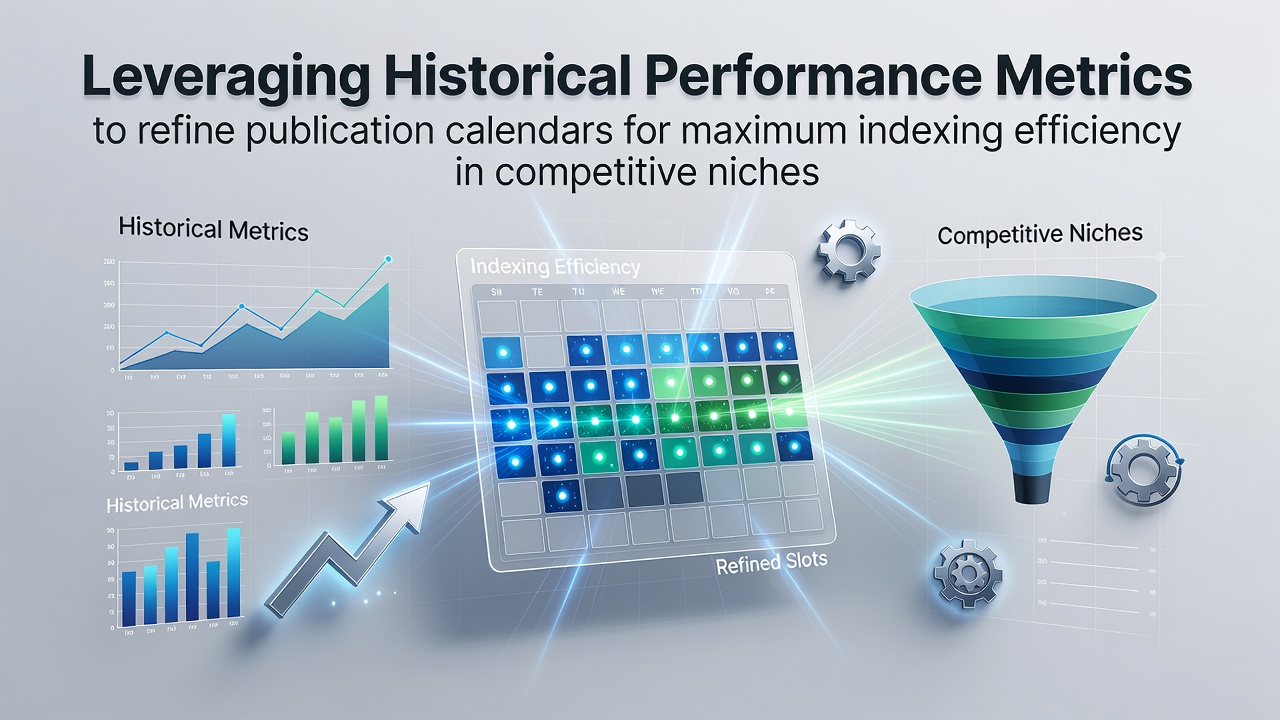
Studies of content sites reveal that articles posted on Tuesdays and Wednesdays between 9 a.m. and 11 a.m. UTC frequently achieve indexation within 24 hours, whereas weekend releases in the same niches can stretch to 72 hours or longer. Teams reviewing twelve months of logs often discover secondary peaks on Thursday afternoons that correlate with increased crawler activity, and they adjust calendars accordingly without altering overall output volume. Evidence suggests that seasonal shifts also appear in the records, with October traditionally showing elevated crawl rates across many industries as search engines prepare for end-of-year updates, and October 2026 followed this established pattern according to aggregated industry reports.
Refining Calendars Using Data-Driven Adjustments
Once patterns surface, schedulers begin shifting high-priority pieces into previously successful time blocks while reserving lower-competition topics for slower periods, and this redistribution improves overall indexing throughput. Multiple case examples illustrate how one technology blog reduced average indexation time from 48 hours to under 12 hours after aligning releases with its historical crawl peaks, and similar results appear in travel and health verticals when teams apply the same method. The process requires ongoing validation because search engine behavior evolves, yet the core practice of cross-referencing past performance with current crawl estimates remains consistent across documented implementations.

Applying Insights in Competitive Niches
High-competition environments reward precise timing because crawl budgets tighten when multiple sites publish simultaneously, and historical metrics help identify gaps where a single domain can capture disproportionate attention. Figures from global search studies show that sites maintaining detailed calendars outperform peers who release on fixed weekly schedules, particularly when the niche features daily news cycles or algorithm-sensitive topics. Those managing enterprise-level properties report that integrating historical data with real-time signals from server response codes further sharpens predictions, allowing last-minute calendar tweaks that protect indexing velocity during algorithm refreshes.
Tools and Methods for Ongoing Optimization
Automated scripts that pull data from analytics APIs and overlay it on editorial calendars have become standard practice, and these systems flag upcoming dates that historically underperform so editors can reschedule proactively. External validation comes from sources such as Google's documentation on crawl processes, which confirms the value of consistent publishing rhythms, while reports from the Australian Communications and Media Authority highlight how regional data centers influence crawl timing for sites targeting specific markets. Teams combine these inputs with internal logs to create rolling forecasts that adapt to both long-term trends and short-term anomalies.
Conclusion
Historical performance metrics supply a factual foundation for refining publication calendars, and organizations that systematically apply these records achieve more reliable indexing outcomes in competitive niches. The approach centers on continuous data collection, pattern recognition, and targeted rescheduling rather than guesswork, which produces compounding advantages as search engines respond to established domain signals. As October 2026 demonstrated, timing adjustments grounded in prior cycles continue to deliver efficiency gains when teams treat calendar optimization as an iterative, evidence-based process.